
Bowling Green Industrial Roofing Contractor
Protect Production Areas From Leaks Around Fans, Stacks, and Pipe Racks
Call a Bowling Green industrial roofing contractor that plans roof work around production, hot work rules and the equipment on your roof.
Plant Roofs
Industrial Roofing in Bowling Green
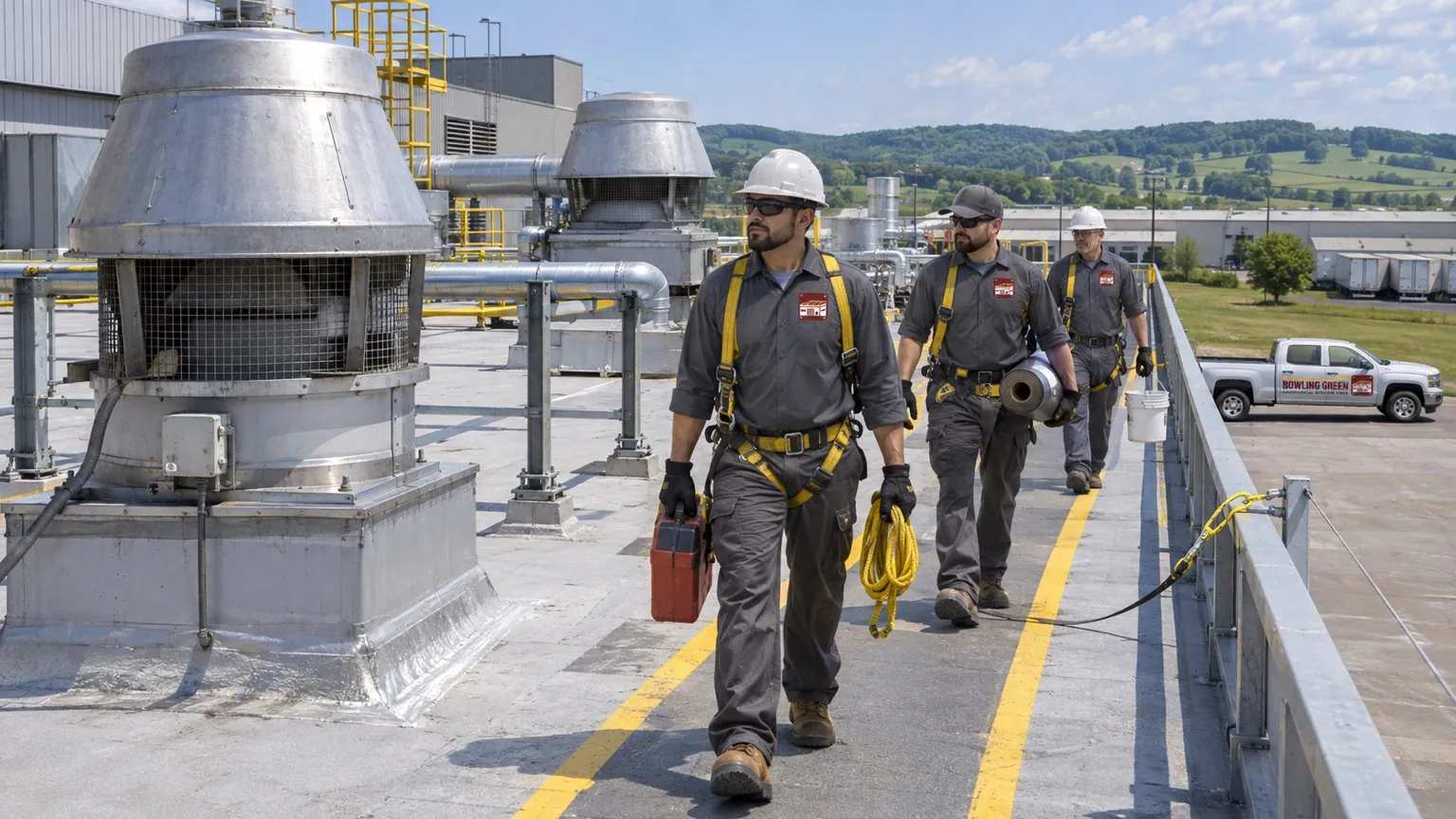
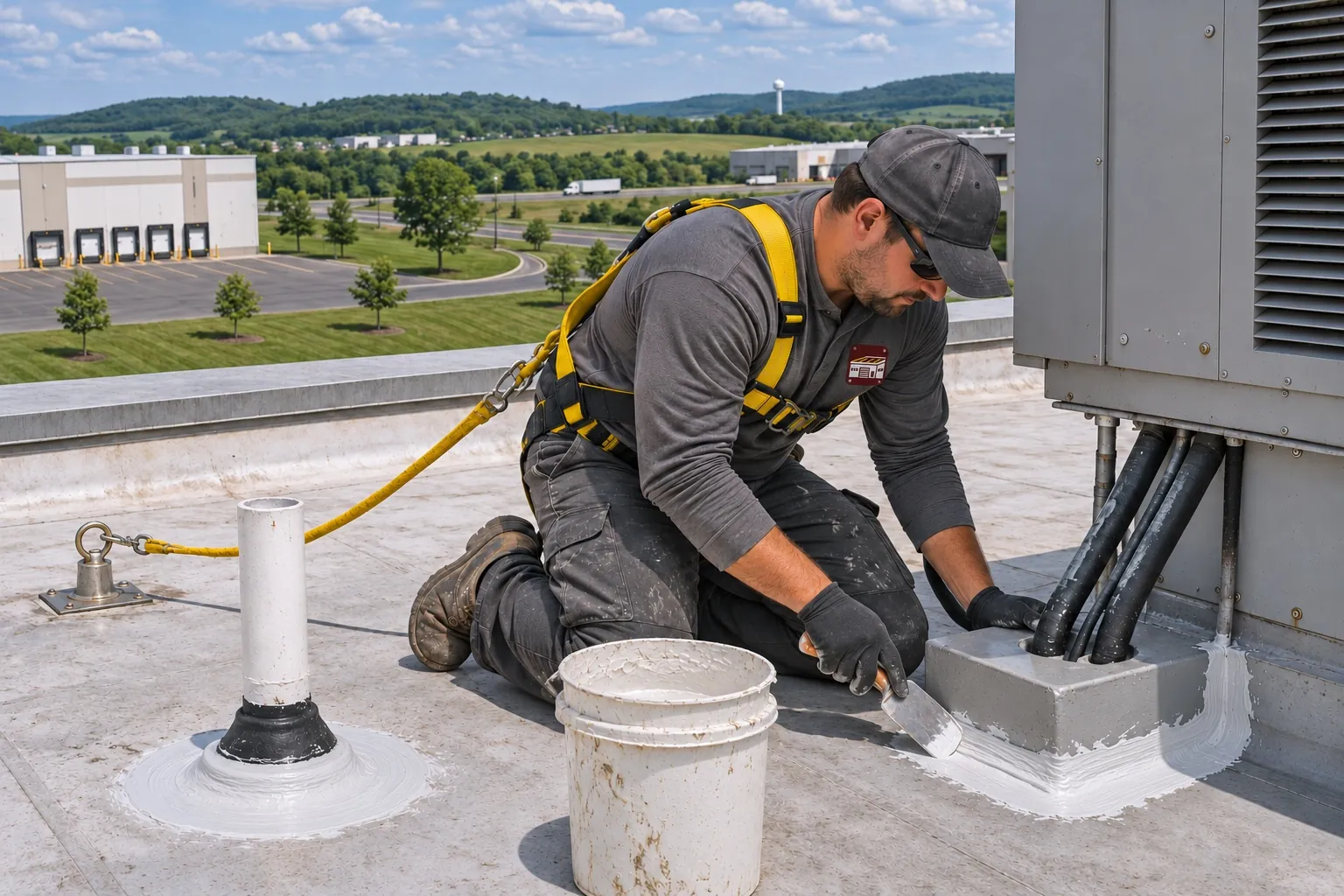
For a Bowling Green industrial roofing contractor, plant work means roofs carrying exhaust fans, pipe racks, stacks and heavy curbs over production lines that must stay dry. Every penetration is a flashing detail, and each one ages at its own pace.
Plant work starts with your site rules. We review access, hot work permits, lockout needs and the areas that must stay sealed before any roofer steps on the roof.
- Flashing at fans, stacks and process piping
- Walkway pads on service routes
- Phased reroofing over running lines
Is This Roof A Fit?
What Your Plant Roof Needs Now
Industrial roofs sort into two groups once the penetrations and the field are checked.
Detail Work
Targeted- Leaks around specific fans or pipes
- Field membrane in good shape
- Damage along service routes
- New equipment to flash in
Phased Reroof
Reroof- Wet insulation under process areas
- Membrane damaged by exhaust residue
- Patches on top of patches
- Deck corrosion near vents
Plant Roof Issues
Industrial Roof Problems at Bowling Green Plants
Plant roofs wear out at the equipment long before the open field.
- Rooftop Units And Penetrations
Exhaust Residue
Oils and process residue from exhaust fans soften some membranes. The area around each fan gets checked for swelling and surface breakdown.
- Rooftop Units And Penetrations
Pipe Supports Cutting In
Pipe racks set directly on the membrane grind through it as pipes expand. Proper supports and pads spread the load.
- Rooftop Units And Penetrations
Curbs Added Over Time
Years of new equipment leave curbs flashed by different hands. Mixed details leak at the corners.
- Field And Seams
Service Traffic
Maintenance staff crossing the roof wear paths and drop parts. Marked walkways keep foot traffic on protected pads.
- Rooftop Units And Penetrations
Heat Near Stacks
Hot stacks and vents need flashing rated for the temperature, or the membrane around them shrinks and splits.
Plant Roof Options
Industrial Roofing Options for Bowling Green Plants
Plant roof work scales from equipment details to a phased new roof.
Equipment Flashing
Walkway and Protection
Phased Reroof
Leak Over a Production Line?
Call and tell us which equipment sits above the leak. We plan access with your maintenance lead.
Plant Roof Steps
How Plant Roof Work Is Scheduled
Industrial roofing in Bowling Green follows five steps built around keeping production running.
- On The Roof
Inspect Your Roof
We walk with your maintenance lead, logging every fan, curb, stack and pipe support and the condition of each.
- Paperwork
Review Site Rules
Access points, hot work permits, lockouts and PPE needs are set before work dates are picked.
- Paperwork
Phase the Work
Roof zones are matched to production areas so sealed spaces and running lines stay protected.
- On The Roof
Build Each Zone
Each zone is opened, repaired or reroofed, and closed before the crew moves to the next.
- At The Building
Hand Off the Roof
You get a roof map showing new details, walkway routes and items to watch.
Why Plan It
Benefits of Planned Industrial Roof Work
Planning plant roof work with production in mind protects output as well as the roof.
Lines Keep Running
Phased zones keep production going under the roof.
Details That Last
Flashings sized for each fan and stack hold longer.
Fewer Punctures
Walkways steer service traffic off the membrane.
A Roof Map
Every curb and penetration is logged for future work.
| Factor | Repairing | A New Plant Roof |
|---|---|---|
| Leaks | Around specific equipment | Across process areas |
| Membrane | Sound away from equipment | Damaged by residue or age |
| Insulation | Dry | Wet under production zones |
| Planning | Short windows | Zones tied to the production plan |
| Equipment | Flashing worn at some curbs | Most details failing together |
Plant Checklist
What We Ask Your Maintenance Team
Plant roof work starts with answers from the people who run the building.
- Site safety rules, PPE and sign-in steps
- Shift times and production areas to protect
- Exhaust types coming out of each roof fan
- Hot stacks or vents that need rated flashing
- Roof access points and service routes
- Crane setup areas and delivery windows
Bowling Green Plants
Industrial Roofs Around Bowling Green
Bowling Green industry sits in a few clear areas, and each one shapes the roof work.
Kentucky Transpark
The Transpark in northern Warren County has rail-served sites and its own I-65 interchange at Exit 30, opened in 2017. Plant roofs there are wide and equipment-heavy.
I-65 and I-165 Corridors
Plants and warehouses near I-65 and along I-165, the former Natcher Parkway, run long roofs with many curbs.
Older Industrial Parks
Older parks closer to town hold plants with roofs replaced in pieces over decades, so details vary across one roof.
Safety-Driven Access
Each plant sets its own rules for ladders, hatches, hot work and fall protection. Roof work schedules follow those rules from the first visit.
Related Work
Other Services for Plant Roofs
Plant roof work often connects to these services.
Commercial Roof Replacement
Phased tear-off when wet insulation spreads under production.
See the service →Owner Questions
Plant Questions for a Bowling Green Industrial Roofing Contractor
Plant managers in Bowling Green ask these first.
Roof Systems And Repairs
How do you handle roofs with exhaust fans and pipe racks?
What roof membrane works near process exhaust?
Cost And Scheduling
Can industrial roof work happen without shutting down production?
Can new equipment be added to an existing plant roof?
Areas And Permits
Do you work at Kentucky Transpark plants?
Next Step
Plan Plant Work With a Bowling Green Industrial Roofing Contractor
Call or send the plant address. We walk the roof with your maintenance lead and price the work by zone.
(270) 236-5625